Object study 01 / original purpose
Before the bedrooms
The tower began as infrastructure. Reading its original job makes the later accommodation more intelligible—and often more interesting.
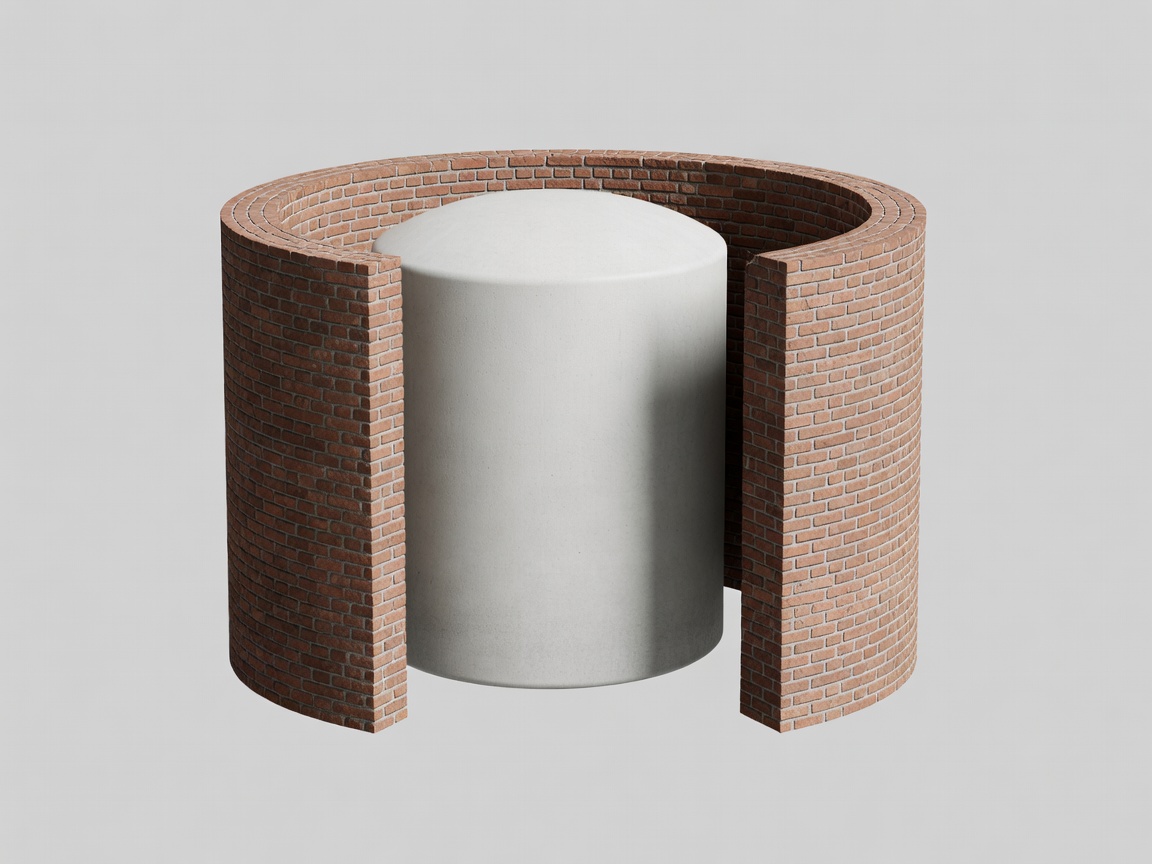
01 / elevation
Why put water above the ground?
A water tower stores water at an elevated level so gravity can help provide pressure to the distribution system below. The usable pressure depends on the difference in height between the water surface and the point of use, alongside losses in the network. A tower can also provide a buffer between pumping and changing demand. Its height was therefore a working dimension, not originally a promise of a panoramic bedroom.
That purpose helps explain the distinctive silhouette: a relatively broad vessel carried by a narrower support, or a tank concealed inside a tall enclosure. Water is heavy, so the relationship between vessel and supporting structure is fundamental. A hotel conversion may remove the original water load, but that does not make every proposed floor, opening or extension structurally straightforward. New loads act in different places and require their own assessment.
02 / anatomy
Separate the tank from its wrapper
From outside, a brick tower can look like one continuous object. Inside, it may have contained a metal tank resting on an internal supporting arrangement, with masonry providing enclosure and architectural expression. Other towers use reinforced concrete or exposed steel frameworks. There is no single universal water-tower plan, and a photograph of the exterior rarely reveals the whole construction.
This distinction matters to a traveller reading a conversion description. “Inside the water tower” does not necessarily mean sleeping inside the former tank itself. Bedrooms may occupy the shaft below it, a new internal structure, an extension, or several of these together. A retained vessel might become an event space or remain inaccessible. Ask which part of the historic building contains your room if that relationship is central to the stay.
03 / setting
Read the network around the landmark
Towers supported municipal supplies, railway operations, industrial works and larger institutional sites. Their forms reflect different requirements and budgets. Some were deliberately monumental civic objects; others were economical pieces of plant. Decorative brickwork is not evidence that the building was a residence, and a castle-like crown does not make it a medieval structure.
Look beyond the tower to understand its setting. A pumping station, reservoir, railway alignment or former factory boundary may explain why it stands there. At Villa Augustus in Dordrecht, the relationship between former water infrastructure, accommodation and a garden setting is part of the operator’s presentation. In Hamburg, the converted tower’s position in Sternschanzenpark gives a different urban context. These are distinct places, not interchangeable versions of a single tower-hotel formula.
04 / change of use
A second life is not a complete reset
When a tower becomes redundant, its continued survival depends on more than a striking outline. The condition of masonry, reinforcement or metalwork, the significance of surviving equipment, and the possibilities for safe circulation all influence reuse. Designation or listing can introduce additional consent requirements. The applicable process depends on the country and the particular building.
A successful conversion makes a viable new use without pretending that the old one never existed. That can mean keeping a legible tank profile, preserving selected fittings or leaving a clear distinction between old structure and new insertions. It does not require every historic component to remain untouched. Conservation is a reasoned process of assessing significance, condition and necessary change, rather than simply favouring whichever surface looks oldest.
05 / evidence
Distinguish the building from its story
Wasserturm Hotel Cologne and Mövenpick Hotel Hamburg provide documented starting points for water-tower hotel research. House in the Clouds at Thorpeness is useful for a different reason: it illustrates how a building connected with water storage can become distinctive self-catering accommodation rather than a staffed hotel. The service model matters as much as the silhouette when planning a trip.
For historical claims, prefer a heritage record, an operator’s documented building history or a local archive over a repeated promotional phrase. Historic England’s listing resources can help with English examples; Historic Environment Scotland offers a separate national context. Neither is a substitute for the relevant local record elsewhere. Dates, designers and former uses should be tied to the individual building, not inferred from its appearance.
Next object study: making space within →
Further reading: National Heritage List for England; Historic Environment Scotland; operator references.